





Regulatory affairs (RA) in pharma is the discipline that translates complex scientific, legal, and commercial requirements into successful drug approvals and lifecycle management. The role of regulatory affairs in pharma extends far beyond filing paperwork. RA professionals serve as the primary connection between pharmaceutical companies and global health authorities, integrating ICH guidelines, FDA inspection programs, and business strategy into a single, coherent compliance function. As enforcement tightens in 2026, with programs like CP 7382.850 and the expiration of MSME grace periods, understanding this function is no longer optional for compliance officers and development teams.
What does regulatory affairs do in pharma?
Regulatory affairs professionals manage the entire drug development lifecycle, from preclinical research through post-market surveillance. Their core responsibilities span regulatory submissions, agency communications, labeling compliance, GMP oversight, and clinical trial support. This breadth makes RA one of the most cross-functional roles in the pharmaceutical industry.
The submission types RA teams handle include:
- IND (Investigational New Drug): Required before human clinical trials begin in the United States
- NDA (New Drug Application): The primary pathway for new chemical entities seeking FDA approval
- ANDA (Abbreviated New Drug Application): Used for generic drug approvals, referencing an existing NDA
- BLA (Biologics License Application): Required for biological products, including vaccines and monoclonal antibodies
- MAA (Marketing Authorization Application): The European Medicines Agency equivalent of an NDA
Beyond submissions, RA teams gather regulatory intelligence, monitor agency guidance updates, and prepare organizations for facility inspections. They coordinate directly with quality assurance on GMP compliance and work alongside medical affairs on labeling accuracy. Each of these activities directly affects whether a product reaches patients on schedule.
Pro Tip: Build a regulatory submission calendar that maps each application type to its corresponding agency deadline and internal data readiness milestone. This single tool prevents the most common cause of submission delays: late-stage data gaps.

How regulatory affairs shapes drug development strategy
Modern regulatory affairs has evolved from a clerical, end-of-pipeline function into a strategic business partner that proactively designs approval pathways and benchmarks competitor submissions. This shift is the single most important development in pharmaceutical compliance over the past decade. Companies that embed RA expertise early in R&D consistently reach approval faster and with fewer costly amendments.
Strategic RA teams contribute in four specific ways:
- Early pathway design: RA identifies the optimal regulatory route before Phase I begins, selecting between standard review, Priority Review, Breakthrough Therapy Designation, or Accelerated Approval based on the molecule’s profile and unmet medical need.
- Data generation alignment: RA maps clinical trial endpoints to agency expectations, preventing the scenario where a completed Phase III trial fails to satisfy FDA’s evidentiary standards.
- Competitor benchmarking: RA monitors public databases and agency correspondence to understand how similar products were reviewed, identifying precedents that can accelerate their own submissions.
- Risk-based lifecycle planning: RA connects early development decisions to long-term post-market commitments, including post-approval studies, label updates, and manufacturing change notifications.
“Regulatory affairs is indispensable in embedding compliance into early development decisions, avoiding costly delays and aligning science with regulatory expectations.” — Educo Life Sciences
The practical impact of this strategic integration is measurable. Companies that engage RA in pre-IND meetings with the FDA report fewer clinical holds and more predictable review timelines. Regulatory intelligence, which involves monitoring evolving agency guidance and draft rules to adapt internal strategies pre-emptively, gives organizations a genuine competitive advantage. Waiting until a submission is complete to consult RA is the equivalent of hiring a tax attorney after the audit begins.
What regulatory changes are reshaping pharma compliance in 2026?
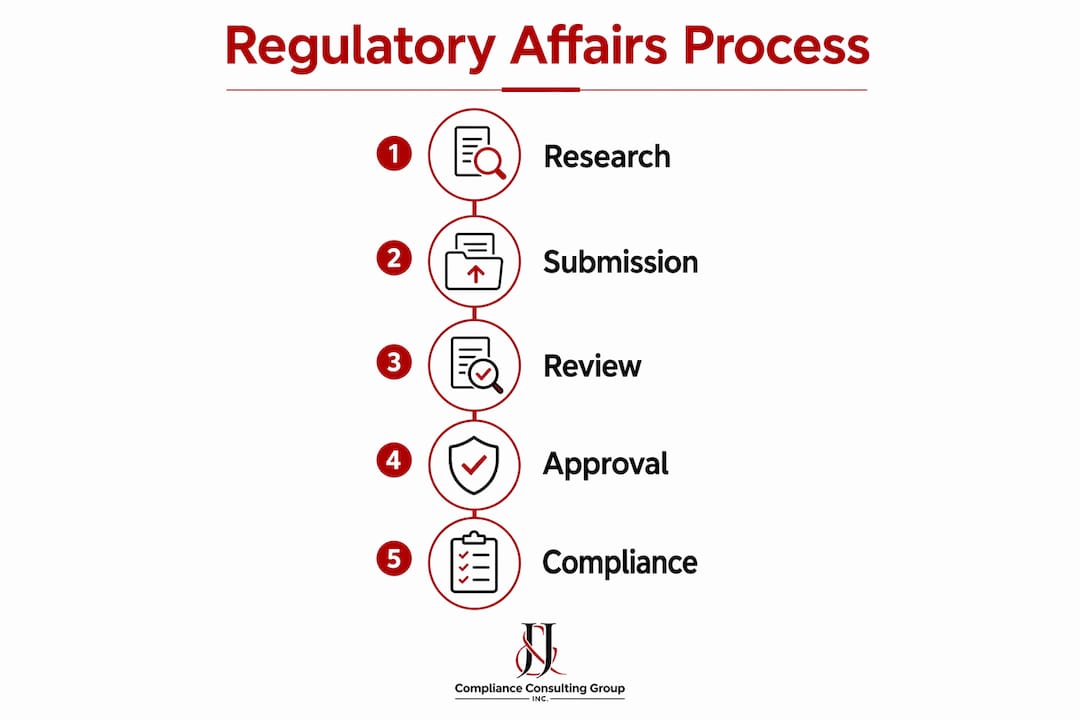
The 2026 regulatory environment is the most demanding in recent memory. Three specific developments are forcing pharmaceutical companies to reassess their compliance infrastructure.
| Regulatory Change | Effective Date | Key Impact |
|---|---|---|
| FDA CP 7382.850 Inspection Framework | February 2, 2026 | Risk-based, enterprise-wide audits replace checklist-driven QSIT inspections |
| MSME GMP Grace Period Expiration | January 2026 | All manufacturing units, including small and medium enterprises, now face comprehensive GMP inspections |
| ICH Guideline Global Adoption | Ongoing through Q2 2026 | Harmonized standards now applied across 70+ countries |
FDA’s CP 7382.850 represents the most significant inspection methodology change in years. It replaced the Quality System Inspection Technique (QSIT) and now emphasizes data-driven risk management over checklist audits. Inspectors evaluate enterprise-wide quality culture, not just individual procedures. This means a single documentation gap in one department can trigger scrutiny across an entire facility.
The MSME grace period expiration carries equally serious implications. Since January 2026, small and medium-sized manufacturers no longer receive leniency on GMP certification requirements. Every manufacturing unit now undergoes the same comprehensive inspection process as large enterprises. For companies that relied on that grace period to delay quality system investments, the window has closed.
ISO certifications add another layer of complexity. ISO 13485 certification alone does not satisfy FDA’s QMSR inspection criteria. Companies must explicitly map complaint handling procedures and MDR reporting timelines to FDA’s enforcement logic. Assuming ISO compliance transfers automatically to FDA compliance is a documented path to inspection findings.
Pro Tip: Run a gap analysis that maps your current ISO 13485 processes directly against FDA QMSR requirements. Document every control point where the standards diverge, and assign ownership for remediation before your next inspection cycle.
Digital compliance tools are now a practical necessity, not a differentiator. Cloud-based EQMS platforms that unify document control, CAPA management, audit trails, training records, and deviation tracking give organizations the data integrity posture that CP 7382.850 inspectors expect to see.
How do regulatory affairs teams collaborate across functions?
Effective regulatory affairs depends on structured collaboration with every function that touches a product’s development and commercialization. RA connects cross-functional teams including R&D, quality assurance, clinical operations, pharmacovigilance, medical affairs, and commercial strategy to keep compliance integrated at every stage.
The most productive RA teams operate through defined collaboration touchpoints:
- R&D integration: RA participates in project team meetings from the discovery phase, flagging regulatory risks before they become development constraints
- Clinical operations alignment: RA reviews protocol designs for regulatory acceptability and manages IND amendments when trial parameters change
- Pharmacovigilance coordination: RA ensures adverse event reporting timelines meet both FDA and EMA requirements, and that safety updates trigger label reviews on schedule
- Quality systems partnership: RA works with QA to prepare for inspections, review batch records, and manage post-approval manufacturing changes
- Agency relationship management: RA leads pre-submission meetings, Type A and Type B meeting requests, and advisory committee preparations with the FDA
External relationship management is equally critical. Effective RA teams build longstanding relationships with agency staff, enabling informal clarifications and smoother submission reviews. These relationships are built through consistent, transparent communication over multiple submission cycles. They are not established in a single pre-NDA meeting.
Common pitfalls in this area include siloed communication between RA and clinical teams, late involvement of RA in manufacturing change decisions, and failure to loop pharmacovigilance into labeling updates. Each of these gaps creates inspection risk and can delay approval timelines by months. You can explore regulatory consulting benefits to understand how external expertise fills these internal gaps efficiently.
Key takeaways
Regulatory affairs in pharma is a strategic function that integrates compliance, science, and business objectives to enable timely drug approvals and sustained market access.
| Point | Details |
|---|---|
| RA spans the full lifecycle | Regulatory affairs manages submissions, inspections, labeling, and post-market compliance from preclinical through commercialization. |
| Strategic integration accelerates approvals | Embedding RA in early R&D reduces clinical holds and prevents costly late-stage data gaps. |
| 2026 enforcement is stricter | CP 7382.850 and MSME grace period expiration mean all manufacturers face rigorous, risk-based FDA inspections. |
| ISO alone is not enough | Companies must explicitly map ISO 13485 controls to FDA QMSR requirements to satisfy current inspection standards. |
| Cross-functional collaboration is non-negotiable | RA effectiveness depends on structured partnerships with R&D, quality, clinical, and pharmacovigilance teams. |
Regulatory affairs has earned its seat at the strategy table
I have spent years watching regulatory affairs get treated as a late-stage checkpoint rather than a development partner. That model consistently produces the same outcome: expensive amendments, delayed approvals, and inspection findings that could have been avoided with earlier RA involvement.
The shift I find most significant is not the new inspection frameworks or the tightening GMP standards. Those are enforcement mechanisms. The real change is that the most successful pharmaceutical organizations now treat RA professionals as strategic advisors who shape product development from day one. They are in the room when target product profiles are written, not when the NDA is being assembled.
Gene therapies, digital health tools, and combination products are creating regulatory questions that existing frameworks were not designed to answer. The professionals who will navigate those questions successfully are the ones building agency relationships now, before they need a favor. They are also the ones investing in regulatory intelligence systems that track draft guidance and enforcement trends, not just final rules.
My honest advice to compliance officers: stop measuring RA performance by submission count and start measuring it by the quality of decisions made before a single page of a submission is written. That is where the real impact of regulatory affairs lives.
— Mike
How Jjccgroup supports your regulatory affairs strategy
Jjccgroup brings over 30 years of FDA compliance expertise to pharmaceutical companies that need more than a checklist. Whether you are preparing for a CP 7382.850 inspection, managing a global submission portfolio, or building a regulatory strategy for a new molecular entity, Jjccgroup provides the depth and continuity that internal teams often cannot sustain alone.

From FDA compliance services and inspection readiness programs to full regulatory submission support, Jjccgroup’s consulting model is built around your specific product and market goals. Their team works alongside your R&D, quality, and clinical functions to close compliance gaps before they become enforcement findings. If you are evaluating your current regulatory strategy against 2026’s tightened standards, their regulatory affairs consulting guide is a practical starting point.
FAQ
What is the role of regulatory affairs in pharma?
Regulatory affairs manages the compliance, submission, and approval processes that allow pharmaceutical products to reach the market legally and safely. RA professionals act as the primary liaison between pharma companies and health authorities like the FDA and EMA.
What submissions do regulatory affairs teams handle?
RA teams prepare and manage IND, NDA, ANDA, BLA, and MAA applications, along with post-approval amendments, labeling updates, and manufacturing change notifications throughout a product’s lifecycle.
How has FDA inspection changed in 2026?
FDA inspections now follow Compliance Program CP 7382.850, which replaced QSIT and focuses on enterprise-wide risk management and data integrity rather than procedure-by-procedure checklist reviews.
Does ISO 13485 certification satisfy FDA QMSR requirements?
No. ISO 13485 certification does not automatically meet FDA QMSR inspection criteria. Companies must explicitly map their complaint handling and MDR reporting processes to FDA’s enforcement expectations.
Why should regulatory affairs be involved early in drug development?
Early RA involvement aligns clinical trial design and data generation with agency expectations, reducing the risk of clinical holds, incomplete submissions, and costly late-stage amendments.
Recommended
- Pharmaceutical Regulatory Affairs: Your Career Guide – J&J Consulting Group- FDA Regulatory Compliance
- Regulatory Affairs Consultancy: Your Guide to FDA Compliance – J&J Consulting Group- FDA Regulatory Compliance
- Your Guide to Pharmaceutical Regulatory Consulting – J&J Consulting Group- FDA Regulatory Compliance
- Regulatory Strategy Guide for Drug Development | Guide
