




Pharmaceutical supply chain compliance risks are defined as the regulatory, operational, and third-party failure points that expose drug products to adulteration, diversion, or loss of traceability, directly threatening patient safety and market authorization. In 2026, the regulatory stakes are higher than ever. The Drug Supply Chain Security Act (DSCSA) now requires functional serialization and interoperable data exchange at the package level with all direct trading partners, and EU Good Distribution Practice (GDP) mandates risk-based qualification of every service provider in the chain. For compliance officers and risk managers, understanding where these obligations break down in practice is the difference between a clean inspection and a product recall.
1. Why serialization and traceability are the foundation of compliance risk management
Serialization is the technical backbone of DSCSA compliance, and its failure modes are more operationally damaging than most teams anticipate. The 2026 enforcement posture requires not just serialized packaging but verified, interoperable Electronic Product Code Information Services (EPCIS) data exchange with every trading partner. Gaps in aggregation data, mismatched identifiers, or expired digital certificates can silently block transmission and trigger downstream product quarantines with no obvious error message.
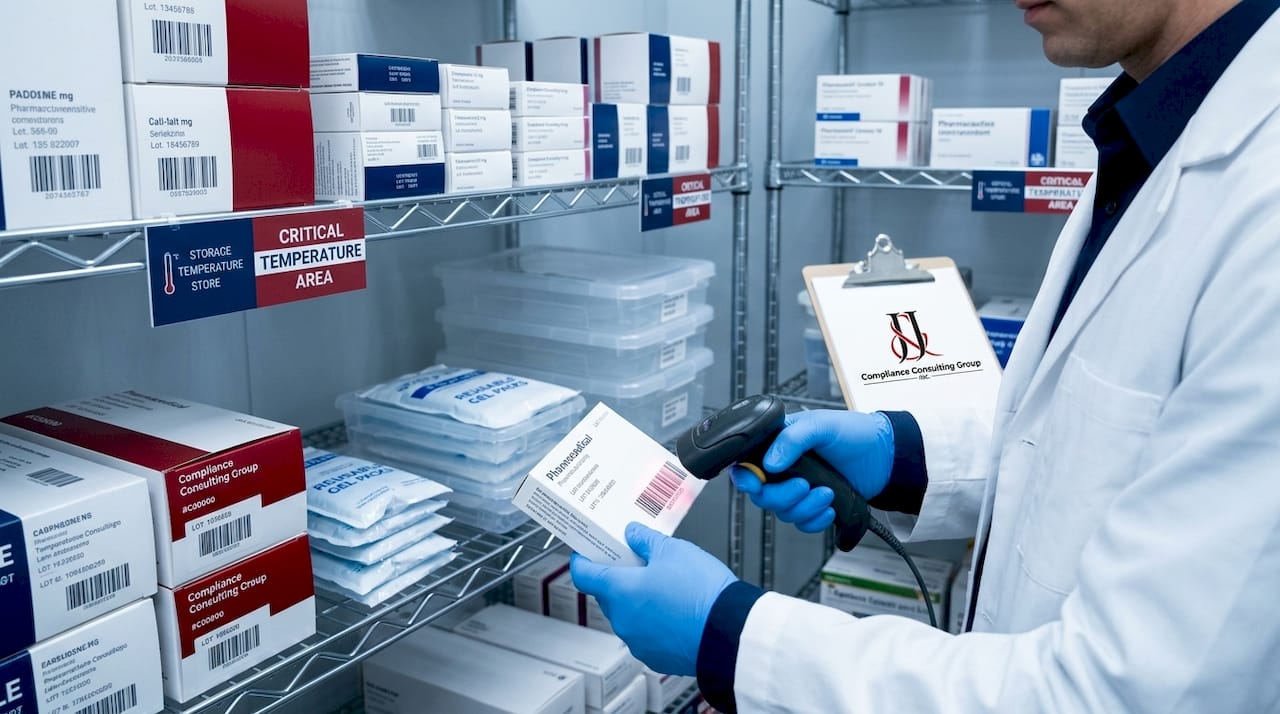
Expired certificates are among the most preventable yet frequently overlooked failure modes in DSCSA compliance. A certificate that lapses mid-shipment can halt an entire product lot at a distribution center while the root cause takes hours or days to diagnose. The operational and financial cost of that delay compounds quickly when temperature-sensitive products are involved.
Serialization systems should function as operational intelligence tools, not just compliance checkboxes. Real-time data from serialization platforms can flag diversion patterns, identify high-risk distribution nodes, and support proactive recall management. Teams that treat serialization as a reporting burden miss the strategic value embedded in that data.
- Maintain a centralized certificate inventory with automated expiry alerts set at 90, 60, and 30 days before renewal deadlines.
- Define joint escalation matrices with trading partners so that EPCIS transmission failures trigger a coordinated response, not a blame cycle.
- Conduct quarterly outage simulations to validate that manual fallback procedures preserve data integrity during system downtime.
Pro Tip: Build certificate lifecycle management into your quality management system as a scheduled control, not an ad hoc task. Automated alerts and annual SOP testing for renewal procedures prevent the silent failures that create the most expensive compliance surprises.
2. How supplier qualification and GDP compliance reduce third-party risk
EU GDP requires risk-based qualification of service providers that accounts for temperature ranges, transport duration, subcontracting arrangements, and deviation history. The depth of qualification must be proportional to the potential impact on product quality and patient safety. This is not a one-time audit exercise. It is a continuous oversight obligation with documented evidence at every stage.
Qualification failures at the third-party level are a leading source of inspection findings. 30 to 40 percent of major GMP and GDP inspection findings originate outside core manufacturing, most often linked to supplier oversight gaps and temperature control inconsistencies. That figure tells compliance officers exactly where to focus audit resources.
A structured qualification program for logistics and storage providers should include the following elements:
- Initial qualification audit covering facility controls, temperature mapping data, equipment calibration records, and staff training documentation.
- Quality agreement execution that assigns explicit accountability for deviation reporting, corrective and preventive action (CAPA) timelines, and regulatory notification obligations.
- KPI-based ongoing monitoring tracking temperature excursion rates, on-time delivery performance, deviation frequency, and audit finding closure rates.
- Periodic re-qualification triggered by contract changes, regulatory findings, significant deviations, or changes in the provider’s subcontracting arrangements.
- Upstream tier review to identify second and third-tier supplier risks that could cause counterfeit infiltration, diversion, or shortages at the primary supplier level.
Service providers must be continuously monitored post-qualification through structured audits, KPI dashboards, and deviation trend analysis. Documentation supporting ongoing compliance must be available for regulatory inspection at any time.
Pro Tip: Transport validation is a joint responsibility between your organization and your transport provider. Define protocols explicitly in your quality agreement, share audit evidence bilaterally, and never assume the provider’s internal validation covers your product’s specific requirements.
3. Operational and digital risks that compound compliance exposure
Fragmented enterprise system data from disconnected ERP, Quality Management System (QMS), and Transportation Management System (TMS) platforms prevents timely response to excursions and disruptions. When a temperature deviation occurs in transit and the alert lives in a logistics portal that does not connect to the QMS, the response is delayed and the documentation trail is incomplete. That gap becomes a compliance finding.
Cybersecurity is now a direct supply chain regulatory risk, not just an IT concern. The Change Healthcare ransomware attack disrupted 70,000 pharmacies and exposed 190 million patient records, demonstrating how a single digital breach cascades across the entire pharmaceutical distribution network. Regulators are increasingly scrutinizing cybersecurity controls as part of supply chain oversight.
Key operational risk areas that compliance teams must address include:
- System integration gaps: Multiple third-party logistics providers (3PLs) operating on separate platforms create data silos that obscure compliance status in real time.
- Manual fallback deficiencies: Regulatory traceability obligations continue unpaused during IT outages. Untested manual procedures with incomplete data capture create both compliance and data integrity risks.
- Contractual change notification gaps: 3PL system upgrades or subcontractor changes that are not flagged to the pharmaceutical company can invalidate existing qualifications without warning.
- Emerging mitigation tools: Digital twin technology and AI-driven analytics are gaining traction as platforms for scenario planning, excursion prediction, and compliance workflow automation.
4. Top pharmaceutical supply chain compliance risks: prioritized by impact
The following list ranks the most consequential compliance risks in pharmaceuticals by their frequency in regulatory findings and their potential impact on patient safety and market access.
-
Serialization and EPCIS data exchange failures. Interoperability gaps between trading partner systems cause product holds and DSCSA violations. The risk intensifies when certificate management is manual and audit trails are incomplete.
-
Supplier and 3PL oversight failures. Inadequate qualification, infrequent audits, and poorly defined quality agreements leave pharmaceutical companies exposed to GDP violations originating outside their direct control.
-
Cold chain and temperature excursion breaches. Temperature-sensitive biologics and vaccines are particularly vulnerable during transport handoffs. A single undetected excursion can render an entire shipment non-releasable.
-
Fragmented regulatory documentation. Supply chain compliance increasingly constitutes a regulatory interface where incomplete or inconsistent documentation becomes a release-blocking risk factor during inspections.
-
Cybersecurity and counterfeit drug infiltration. Interconnected risks including cyber threats, counterfeit product entry, and geopolitical disruptions require integrated risk management rather than siloed responses.
-
Inadequate training and change management. Staff unfamiliar with updated SOPs, new serialization system interfaces, or revised GDP requirements introduce human error as a compliance variable that audits consistently surface.
| Risk category | Primary consequence |
|---|---|
| Serialization data failures | DSCSA violations, product quarantine |
| Supplier oversight gaps | GDP inspection findings, recall exposure |
| Cold chain breaches | Product loss, patient safety incidents |
| Fragmented documentation | Release holds, regulatory action |
| Cybersecurity incidents | Supply disruption, data breach liability |
5. Effective frameworks for supply chain compliance risk management
A risk-based approach to pharmaceutical supply chain compliance requires structured frameworks that connect supplier qualification, serialization data governance, and incident response into a single operating model. The following practices define what high-performing compliance programs do differently.
- Risk-tiered supplier qualification: Classify suppliers and service providers by product criticality and supply chain position. Tier 1 direct suppliers receive full qualification audits annually. Tier 2 and Tier 3 providers receive risk-proportionate oversight with documented rationale.
- Serialization data quality controls: Implement automated validation rules within your EPCIS platform to catch data format errors, duplicate identifiers, and missing aggregation records before they reach trading partners.
- Incident escalation pathways: Define written escalation procedures for serialization failures, temperature excursions, and supplier deviations. Each pathway should specify response timelines, notification responsibilities, and regulatory reporting thresholds.
- Real-time compliance visibility: Integrate ERP, QMS, and TMS data into a unified compliance dashboard. Platforms like Veeva Vault QMS or SAP Integrated Business Planning provide the cross-system visibility that manual reporting cannot match.
- Continuous improvement and audit readiness: Conduct mock inspections twice annually using current GDP and DSCSA expectations as the audit framework. Track CAPA closure rates as a leading indicator of compliance program health.
Pro Tip: Embed regulatory consulting expertise into your annual compliance calendar, not just during inspection preparation. Proactive gap assessments against current FDA and EMA expectations consistently surface risks before regulators do.
Key takeaways
Managing pharmaceutical supply chain compliance risks requires integrated controls across serialization, supplier qualification, and digital infrastructure, with continuous monitoring and tested fallback procedures at every layer.
| Point | Details |
|---|---|
| Serialization is operational intelligence | Use EPCIS data proactively to detect diversion and support recall management, not just to satisfy DSCSA reporting. |
| Supplier qualification is continuous | Post-qualification KPI monitoring and periodic re-audits are mandatory GDP obligations, not optional best practices. |
| Digital integration reduces risk | Connecting ERP, QMS, and TMS data eliminates the visibility gaps that turn excursions into inspection findings. |
| Cybersecurity is a supply chain risk | Ransomware and data breaches disrupt distribution networks and carry direct regulatory consequences. |
| Fallback procedures must be tested | Quarterly outage simulations with full data integrity validation are the standard for DSCSA-resilient operations. |
What I’ve learned about compliance risks that most teams underestimate
After working through dozens of pharmaceutical supply chain compliance assessments, the pattern that stands out most is not the risks teams know about. It is the ones they have normalized. Serialization systems that generate daily errors that nobody investigates. Supplier quality agreements that have not been updated since the original qualification. Manual fallback binders that have never been tested in a live outage scenario.
The DSCSA enforcement posture in 2026 has narrowed the discretion that many organizations relied on during the phased implementation years. What was once a warning letter risk is now a product hold risk. That shift demands a different level of operational discipline than most compliance programs currently operate at.
The teams that manage these risks well share one characteristic: they treat their serialization and supplier data as a continuous feedback loop, not a periodic compliance exercise. They know their certificate expiry dates. They know which 3PLs have open deviations. They know exactly what their fallback procedure looks like at 2 a.m. on a Sunday. That operational specificity is what separates a resilient compliance program from one that is perpetually reactive.
Building that kind of program takes structured investment in people, process, and technology. It also takes the willingness to ask hard questions about where your current controls actually stop and where you are relying on assumptions.
— Mike
How Jjccgroup supports pharmaceutical supply chain compliance
Jjccgroup brings over 30 years of FDA regulatory expertise to pharmaceutical companies managing complex supply chain compliance obligations. Whether you are preparing for DSCSA interoperability requirements, closing gaps in your GDP supplier qualification program, or building audit-ready documentation for your next inspection, Jjccgroup provides the structured consulting support that turns compliance obligations into operational confidence.

From serialization readiness assessments to FDA compliance consulting and supplier qualification frameworks, Jjccgroup’s team works alongside your compliance officers and risk managers to identify gaps, design controls, and prepare your organization for the regulatory expectations that define 2026 and beyond. Explore Jjccgroup’s pharmaceutical regulatory consulting services to see how expert guidance reduces your compliance risk exposure before your next inspection.
FAQ
What are the biggest pharmaceutical supply chain compliance risks in 2026?
The highest-impact risks are serialization and EPCIS data exchange failures under DSCSA, supplier oversight gaps that generate GDP inspection findings, and cold chain breaches during transport handoffs. Cybersecurity incidents and fragmented compliance documentation are also increasingly prominent regulatory concerns.
How does DSCSA affect supply chain compliance risk management?
DSCSA now requires functional serialization, aggregation, and interoperable electronic data exchange with all direct trading partners at the package level. Organizations that cannot demonstrate these capabilities face product holds, enforcement actions, and distribution disruptions.
Why does supplier qualification matter for pharma compliance?
30 to 40 percent of major GDP inspection findings originate outside core manufacturing, most often from supplier oversight and temperature control failures. Rigorous qualification with ongoing KPI monitoring and documented quality agreements is the primary control against third-party compliance exposure.
What is the role of fallback procedures in serialization compliance?
Regulatory traceability obligations under DSCSA do not pause during IT outages. Validated manual fallback procedures with full data integrity controls, tested through quarterly outage simulations, are required to maintain compliance continuity when serialization systems go offline.
How can compliance officers reduce fragmented documentation risks?
Integrating ERP, QMS, and TMS data into a unified compliance platform eliminates the documentation gaps that become release-blocking findings during inspections. Structured document control processes and mock inspection programs further reduce the risk of fragmented evidence at the regulatory interface.
