





Audit season in a regulated industry is not a routine administrative exercise. It is a high-stakes evaluation of whether your quality management system actually functions the way your documentation says it does. For quality assurance professionals and compliance officers in pharmaceutical, medical device, and food and beverage companies, quality management system audit preparation determines whether you walk out of an audit with a clean report or a list of major nonconformities that threatens your certification. This guide delivers the practical methodology, checklists, and real-world strategies you need to prepare with confidence and execute without surprises.
Table of Contents
- Key takeaways
- Quality management system audit preparation: understanding scope and objectives
- Step-by-step preparation: documentation, gap analysis, and internal audits
- Preparing your audit environment and team
- Audit execution and post-audit verification
- My take on what actually separates prepared teams from reactive ones
- How Jjccgroup supports your audit readiness
- FAQ
Key takeaways
| Point | Details |
|---|---|
| Define scope before preparing | Clarify audit type, applicable clauses, and regulatory requirements before reviewing a single document. |
| Gap analysis drives readiness | A clause-by-clause gap analysis against ISO 9001:2015 reveals preparation priorities faster than any generic checklist. |
| Evidence retrieval is a rehearsable skill | Practice locating calibration, training, and CAPA records quickly so auditors never wait on you. |
| Corrective action closure is non-negotiable | Open or superficially closed CAPAs are among the top reasons audits result in repeat findings. |
| Auditor independence protects credibility | Documented competency and process independence are requirements, not formalities. |
Quality management system audit preparation: understanding scope and objectives
Before you organize a single binder or schedule a single interview, you need to know exactly what kind of audit you are preparing for. The preparation strategy for an internal surveillance audit looks very different from readiness for an FDA inspection or an ISO 9001:2015 recertification audit.
The four audit types you will encounter in a regulated industry are:
- Internal audits: Conducted by your own organization to verify QMS conformance and effectiveness per Clause 9.2 of ISO 9001:2015.
- Supplier audits: Assessments of your supply chain partners to verify their quality systems meet your requirements.
- Certification audits: Third-party audits conducted by a registrar to grant or maintain ISO 9001 or ISO 13485 certification.
- Regulatory inspections: Government-led evaluations such as FDA inspections under 21 CFR Part 820 or the Quality Management System Regulation (QMSR).
Each audit type carries different scope expectations. A certification audit will examine every applicable clause of the standard. A regulatory inspection may focus on specific product lines, complaint handling, or post-market surveillance. Defining the correct scope upfront, including which processes, sites, and regulatory requirements apply, prevents wasted preparation effort and closes gaps in the right places.
Audit program planning must be risk- and change-based, factoring in process importance, recent organizational changes, and results from prior audits. If your organization launched a new product line or changed a critical supplier in the past year, those areas need heightened attention in your preparation.
Pro Tip: Map your audit scope to your process interaction diagram before assigning preparation tasks. This prevents teams from preparing in silos and missing cross-functional linkages that auditors routinely probe.
Step-by-step preparation: documentation, gap analysis, and internal audits
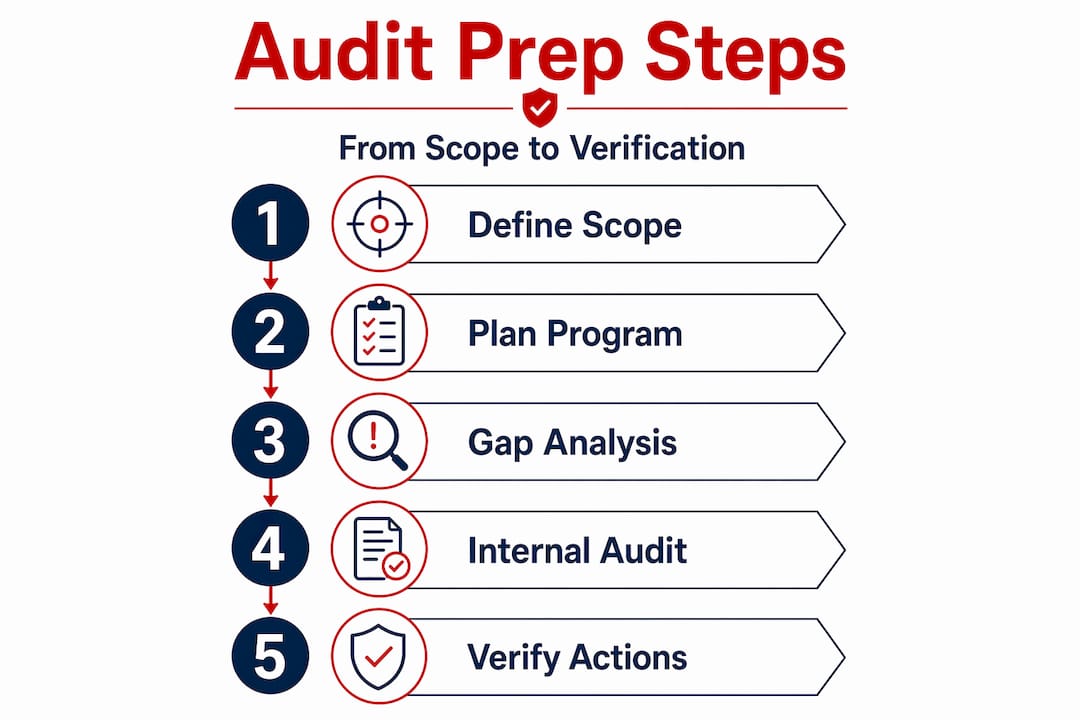
QMS audit planning typically spans four to eight weeks, covering planning, execution, reporting, and corrective action follow-up. Compressing that timeline increases risk. Here is how to use those weeks effectively.
-
Conduct a clause-by-clause gap analysis. Map your current documented information and actual practices against every applicable clause of ISO 9001:2015. ISO 9001:2015 audit preparation requires alignment of real processes with documented information, focusing on practical implementation rather than paperwork existence. Where gaps exist between what your procedures say and what your teams actually do, close them before the audit, not during it.
-
Review and update documented information. Confirm that all procedures, work instructions, and forms reflect current practice. Remove obsolete versions from circulation. FDA documentation management under the QMSR requires that SOPs are current, quality records are accurate and retrievable, and obsolete documents are removed from active use. This applies equally to ISO-regulated environments.
-
Organize objective evidence by clause. Build a physical or digital evidence folder organized by standard clause or regulatory requirement. Include calibration records, training logs, management review minutes, internal audit reports, and CAPA records. Auditors will ask for these by name, and retrieval speed matters.
-
Execute internal audits with process-specific checklists. Your internal audit is not a pre-audit rehearsal. It is a genuine conformance check. Internal audits per Clause 9.2 require retained documented information showing what was audited, the criteria used, evidence reviewed, and conclusions reached. Generic checklists that only confirm document existence miss the point entirely.
-
Verify that all prior corrective actions are closed. This step is where many organizations lose credibility before the external auditor even arrives. Incomplete closure of corrective actions leads to audit findings. Root cause analysis and verification of effectiveness are required per Clause 10, not optional enhancements.
The table below summarizes key documentation categories and what auditors typically verify in each area.
| Documentation category | What auditors verify |
|---|---|
| Calibration records | Frequency, traceability to standards, out-of-tolerance handling |
| Training records | Role-specific competency, effectiveness evaluation, recurrence schedule |
| Internal audit reports | Scope, criteria, findings, CAPA linkage, closure evidence |
| Management review minutes | Inputs covered, decisions made, action item follow-through |
| CAPA records | Root cause depth, containment actions, effectiveness verification |
Pro Tip: Do not rely on a single master list of documents. Build a clause-to-evidence matrix so any team member can locate the right record in under two minutes. Auditors often challenge retrieval speed under time pressure, and rehearsing that process builds real confidence.
Preparing your audit environment and team
Operational readiness means more than having the right documents. It means your people know their roles, your systems are accessible, and your physical or virtual environment supports efficient evidence presentation.
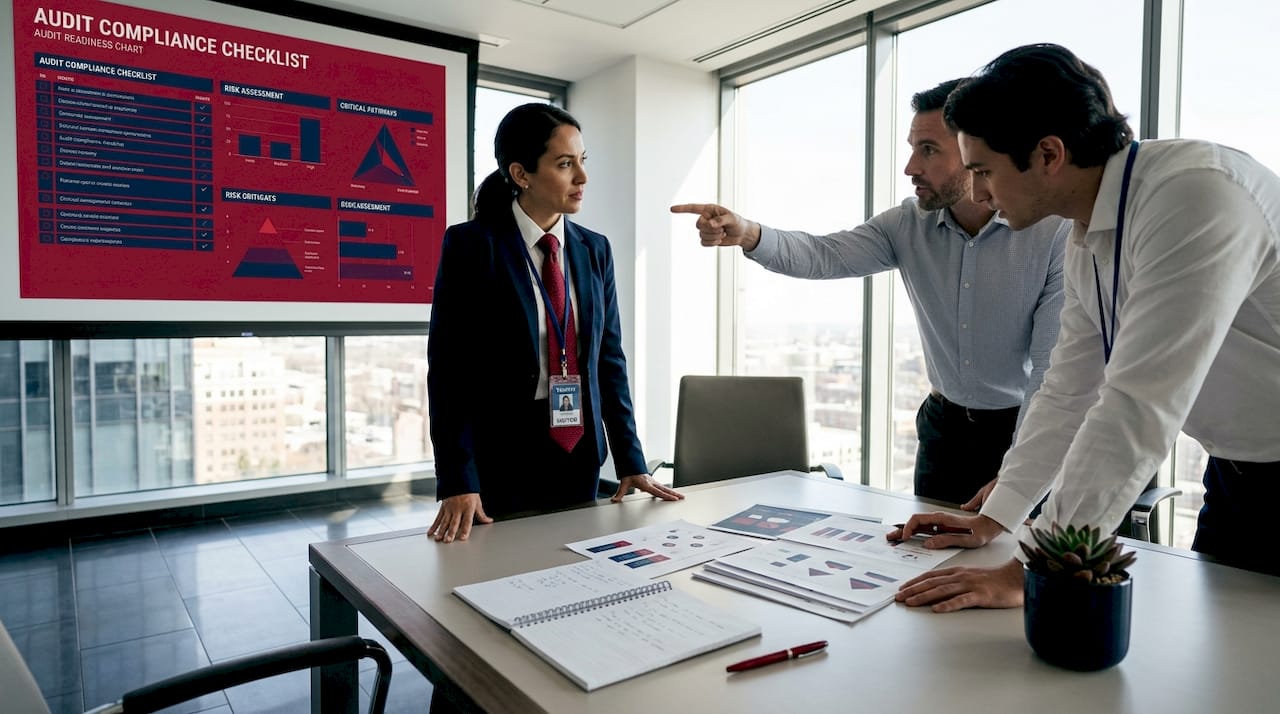
Start with your audit team structure. Auditor independence and documented competency are critical requirements. Auditors must not audit their own processes, and their competency should be documented through training logs or recognized certification such as CQI-IRCA. Assigning someone to audit their own department because they are the most knowledgeable person available is a common mistake that weakens audit credibility from the start.
Personnel preparation goes beyond the audit team. Every employee who might be interviewed during a certification or regulatory audit needs to understand their role in the QMS, not just their job function. Train staff on the difference between what they do and what the procedure says they should do. If those two things do not match, that gap needs to be resolved before the audit, not explained away during it.
Key elements of a well-prepared audit environment include:
- Document access: Confirm that your document control system allows rapid retrieval by clause, process, or record type. Digital systems should be tested for search functionality and access permissions.
- Dedicated audit room: Provide a clean, organized space where auditors can review evidence without interruption. Stock it with printed copies of key procedures and a current organizational chart.
- Communication plan: Brief all department heads on the audit schedule, their expected participation windows, and the protocol for escalating auditor requests they cannot immediately fulfill.
- Evidence staging: Pre-stage commonly requested records such as the most recent management review minutes, the current internal audit schedule, and the CAPA log so they are immediately available at the opening meeting.
Pro Tip: Conduct a mock opening meeting with your team before the actual audit. Walk through introductions, scope confirmation, and logistics. Teams that have rehearsed this moment present far more confidently than those encountering it for the first time.
Audit execution and post-audit verification
The audit itself follows a predictable structure, and knowing that structure reduces anxiety and improves performance across your team.
-
Open the audit formally. The opening meeting sets the tone. Confirm scope, introduce the audit team, review the schedule, and establish communication protocols. Present your QMS overview concisely. Auditors form early impressions here.
-
Present objective evidence systematically. Evidence includes documents, records, interviews, and observations. Do not volunteer information beyond what is requested, but respond to every request promptly and completely. Organized evidence folders pay off at this stage.
-
Manage interviews carefully. Coach your personnel to answer what is asked, nothing more. Honest, concise answers supported by records are far more credible than lengthy explanations. If an auditor asks to see a record, retrieve it quickly.
-
Document findings in real time. As the audit progresses, track every observation and potential finding in a running log. Classify each item as a major nonconformity, minor nonconformity, or observation so your response team can prioritize post-audit work accurately.
-
Close the audit with a structured exit meeting. Review all findings with the audit team, confirm classifications, and agree on timelines for corrective action submission.
The table below compares how major and minor nonconformities differ in terms of response requirements.
| Finding type | Definition | Response requirement |
|---|---|---|
| Major nonconformity | Systematic failure or absence of a required element | Immediate root cause analysis, CAPA, and effectiveness verification before certification |
| Minor nonconformity | Isolated lapse that does not indicate system breakdown | Documented corrective action with defined timeline |
| Observation | Potential risk or opportunity for improvement | Optional response, but documenting action taken demonstrates maturity |
Post-audit, your CAPA process carries the full weight of audit credibility. Root cause analysis must go deeper than “human error” or “training gap.” Use structured methods like 5-Why or fishbone analysis to identify the actual system failure. Verify effectiveness before closing the CAPA, and document that verification. This is how you turn audit findings into genuine quality improvement rather than compliance theater.
You can find detailed guidance on ISO 9001 internal audits and how to structure each phase of execution on the Jjccgroup resource library.
My take on what actually separates prepared teams from reactive ones
I have worked alongside quality teams at pharmaceutical manufacturers and medical device companies who approached audit preparation very differently, and the contrast is striking. The teams that perform best do not treat preparation as a pre-audit sprint. They treat it as a continuous operating mode.
What I have seen derail otherwise capable organizations is not missing documentation. It is the gap between documentation and reality. A procedure says one thing, the operator does something slightly different, and the auditor finds it in the first fifteen minutes of a process walkthrough. That gap existed for months. Nobody closed it because nobody looked.
The other pattern I keep seeing is superficial CAPA closure. A team writes a corrective action, marks it closed after a training session, and moves on. Six months later, the same finding resurfaces. Internal audits are tools for self-awareness, not compliance theater. When organizations use them that way, they stop being surprised by external auditors.
My honest advice: run your internal audit program as if a third-party auditor is watching every step. Use quality risk management thinking to prioritize which processes get the deepest scrutiny. Document your auditor competency and independence with the same rigor you apply to product records. And rehearse evidence retrieval until it is reflexive. The organizations that do this consistently do not just pass audits. They use audits to get better.
— Mike
How Jjccgroup supports your audit readiness
Preparing for a QMS audit while managing day-to-day quality operations is a significant undertaking, especially in regulated industries where the stakes extend beyond certification to patient safety and market access.
Jjccgroup brings over 30 years of regulatory consulting experience to pharmaceutical, medical device, tobacco, dietary supplement, and food and beverage companies facing exactly this challenge. Their team supports documentation control reviews, gap analysis against ISO 9001:2015 and FDA requirements, internal audit program design, and CAPA management. Whether you are preparing for your first certification audit or responding to an FDA inspection, Jjccgroup’s regulatory affairs consulting services provide the structured, expert-led support that turns preparation into confidence. Explore their FDA compliance strategies to see how they have helped organizations like yours achieve and maintain compliance.
FAQ
What does quality management system audit preparation involve?
Quality management system audit preparation involves defining audit scope, conducting a gap analysis, reviewing and updating documented information, executing internal audits, and verifying that all prior corrective actions are closed before the external audit begins.
How long does QMS audit preparation typically take?
QMS audit preparation typically spans four to eight weeks, covering planning, execution, reporting, and corrective action follow-up. Compressed timelines increase the risk of unresolved gaps.
What records do auditors most commonly request?
Auditors routinely request calibration records, training logs, internal audit reports, management review minutes, and CAPA records. Having these organized by clause and retrievable within minutes significantly improves audit performance.
Why do corrective actions get flagged as repeat findings?
Repeat findings occur when corrective actions address symptoms rather than root causes, or when effectiveness verification is skipped. Documented CAPAs must include root cause analysis and verified effectiveness per Clause 10 of ISO 9001:2015.
Can internal auditors audit their own processes?
No. Auditor independence is a requirement under ISO 9001 Clause 9.2. Auditors must not audit their own work, and their competency must be documented through training records or recognized certification.
