



TL;DR: Food recalls are becoming more common as regulatory oversight, supply chain complexity, and food safety expectations continue to evolve. Understanding the causes of food recalls can help manufacturers reduce risk, protect consumers, and maintain regulatory compliance.
- Strong food safety systems help identify risks before products reach consumers.
- Labeling errors, contamination, and supplier issues remain leading recall triggers.
- FDA oversight and improved detection methods contribute to more reported recalls.
- Proactive compliance programs reduce the likelihood of costly recalls and enforcement actions.
For food manufacturers, a product recall is one of the most disruptive events a business can face.
Beyond the immediate costs of removing products from the market, recalls can damage consumer trust, interrupt production, invite regulatory scrutiny, and create long-term financial consequences.
As headlines featuring food recalls appear more and more, many companies are asking the same question: why are there so many food recalls lately?
While recalls may seem more common than ever, the increase is driven by several factors, including changing regulatory oversight, more sophisticated detection methods, and increasingly complex supply chains. Understanding these trends is the first step toward building a proactive food safety program that helps prevent food product recall events before they occur.
Why Are Food Recalls Increasing?
There’s no definite explanation for why so many foods are being recalled. Instead, several industry trends have combined to increase both the number of recalls and public awareness of them.
Food manufacturers today operate within highly interconnected supply chains. A single contaminated ingredient sourced from one supplier can affect dozens of finished products manufactured by multiple companies. As distribution networks expand, a localized issue can quickly become a nationwide recall.
At the same time, advances in laboratory testing and traceability have made it easier for regulators and manufacturers to identify contamination. Enhanced surveillance allows potential hazards to be detected more quickly than in previous years, often before widespread illness occurs. While this may create the perception that foods with recalls are increasing dramatically, improved detection is also helping protect public health.
The FDA’s continued implementation of the Food Safety Modernization Act (FSMA) has also shifted the regulatory focus from responding to contamination to preventing it through risk-based controls and stronger food safety systems.
The Most Common Causes of Food Recalls
Although every recall is unique, several issues consistently account for the majority of food recalls across the industry.
- Undeclared allergens resulting from labeling or packaging errors
- Microbiological contamination, including Listeria monocytogenes, Salmonella, and E. coli
- Foreign material contamination
- Supplier quality failures
- Process control deficiencies during manufacturing
- Mislabeling or inaccurate ingredient declarations
Many of these issues are preventable through comprehensive hazard analyses, validated preventive controls, supplier verification programs, and robust quality management systems.
Why Prevention Is More Effective Than Remediation
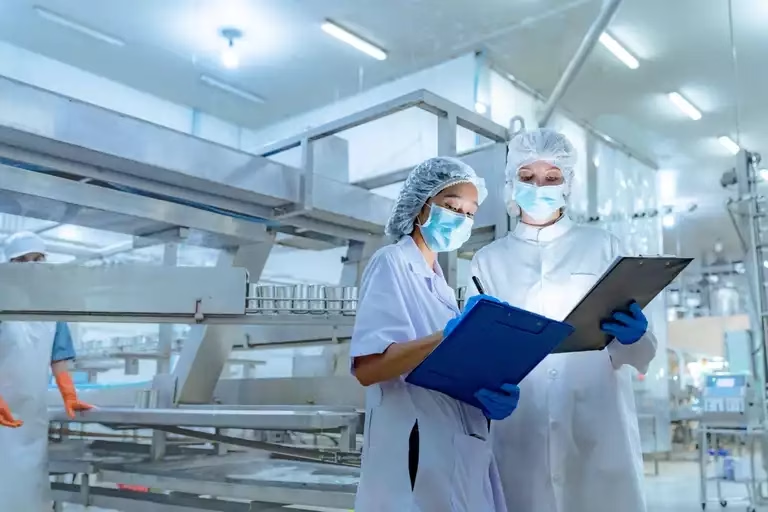
Responding to a recall requires significant time and resources. Manufacturers must identify affected lots, notify customers and regulators, coordinate product retrieval, investigate root causes, and implement corrective actions. Production delays, lost revenue, and reputational damage often follow.
Preventing food recalls begins long before products enter the marketplace. Companies should build food safety into every stage of production by maintaining current Hazard Analysis and Critical Control Point (HACCP) plans, complying with FSMA preventive controls requirements, validating sanitation procedures, and routinely reviewing labeling processes.
Regular internal audits also help organizations identify gaps before regulators or customers do. Equally important is maintaining complete documentation that demonstrates compliance and supports rapid decision-making if an issue arises.
Building a Strong Food Safety Culture
Food safety is not solely the responsibility of the quality department. Organizations that consistently avoid recalls typically foster a company-wide culture of compliance.
That includes providing ongoing employee training, encouraging prompt reporting of potential issues, reviewing supplier performance regularly, and ensuring leadership actively supports quality initiatives. A culture that prioritizes prevention rather than reaction reduces risk while improving operational consistency.
Industry research continues to show that organizations with mature quality systems are better positioned to detect emerging issues before they become regulatory problems. Strong communication between production, quality assurance, purchasing, and executive leadership is essential to maintaining that culture.
Staying Prepared for Regulatory Expectations
As regulatory oversight continues to evolve, manufacturers should expect continued attention to preventive controls, documentation, sanitation, environmental monitoring, and supply chain management.
Companies wondering “Why are there so many food recalls?” should recognize that increased enforcement is only part of the picture. Regulatory agencies also expect businesses to demonstrate that effective food safety systems are actively preventing hazards.
Preparing for inspections, reviewing compliance programs regularly, and partnering with experienced regulatory professionals can significantly reduce risk while supporting efficient product commercialization.
Protect Your Business Before a Recall Happens
At J&J Consulting, we help food manufacturers develop compliant food safety programs, prepare for FDA inspections, strengthen quality systems, and navigate evolving regulatory requirements with confidence.
Whether you’re launching a new product or enhancing an existing compliance program, our team provides practical regulatory guidance tailored to your business.
Learn more about our food and beverage regulatory consulting services or get a quote to discuss your compliance needs today.
