


FDA supplement facility registration is the mandatory process every dietary supplement manufacturing, processing, packing, or holding facility must complete before legally marketing products in the United States. Formally called Food Facility Registration, this requirement falls under the Food Safety Modernization Act (FSMA) and connects directly to current Good Manufacturing Practice (cGMP) obligations under 21 CFR Part 111. The FDA Industry Systems (FIS) portal is the centralized platform for this process, and registration is mandatory for any facility that manufactures, processes, packs, or holds dietary supplements for U.S. consumption. Completing registration correctly produces a unique registration number that supports product traceability and regulatory submissions throughout your compliance program.
What prerequisites do you need before starting supplement facility registration?
Preparation before entering the FDA Industry Systems portal determines whether your submission goes through cleanly or gets flagged for corrections. Regulatory professionals who skip this step often face delays that push back product launch timelines.
Required data elements for registration:
- Legal name of the facility and its owner or operator
- Physical address and mailing address of the facility
- Emergency contact name and 24-hour phone number
- All activity types conducted at the facility (manufacturing, processing, packing, holding)
- Product categories handled, including dietary supplements
- U.S. agent name and contact details for foreign facility registration
The U.S. agent requirement applies to every facility located outside the United States. That agent serves as the official FDA contact for all communications and enforcement matters. Choosing an agent without regulatory experience is a common and costly mistake.
Not every facility must register. Exemptions under 21 CFR 1.226 cover specific scenarios, including farms, restaurants, and certain retail food establishments. Confirm your facility’s status against these exemptions before beginning the process.
Biennial renewal is also a fixed obligation. Facilities must renew their registration between october 1 and december 31 of every even-numbered year, regardless of when the initial registration was filed. Build this window into your compliance calendar from day one.
Pro Tip: Create a dedicated registration data file before logging into FIS. Compile every required data element in one document so you can copy and paste accurately without switching between systems mid-session.

How to complete the FDA supplement facility registration step-by-step
FDA’s FIS portal has been operational since 2003 and is accessible 24 hours a day, 7 days a week from any location worldwide. The Food Facility Registration Module (FFRM) within FIS is the specific interface you will use for supplement facility registration.
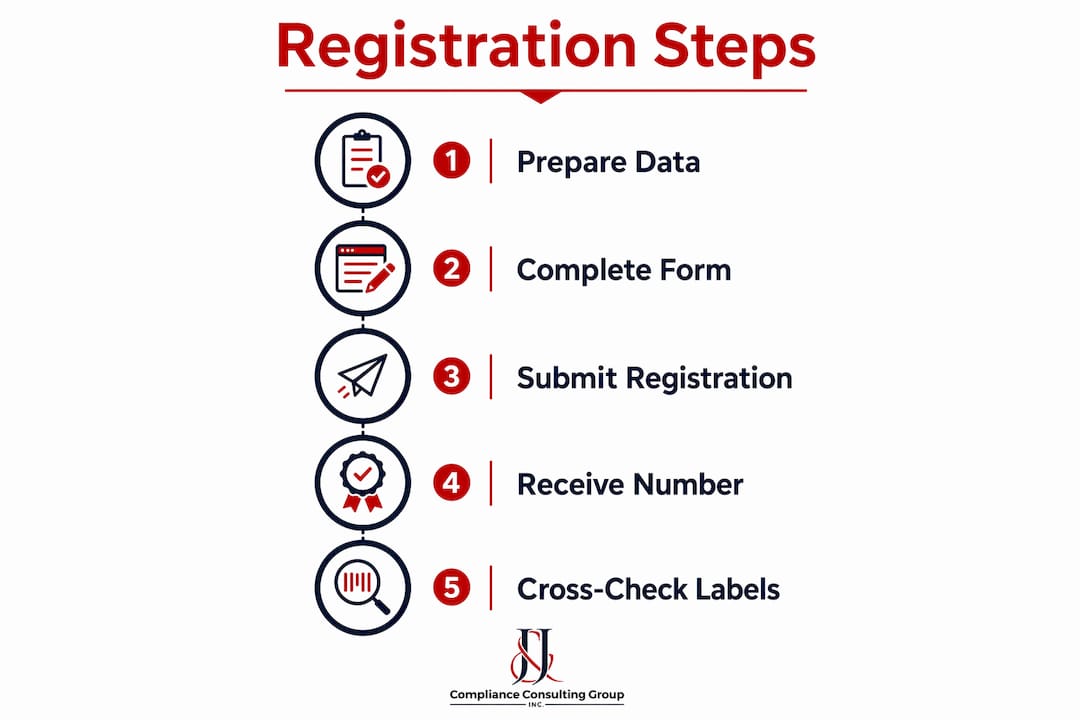
Step-by-step registration process:
- Create or log into your FIS account. Go to the FDA Industry Systems portal and create an account if you do not have one. Use a business email address tied to the facility, not a personal account.
- Navigate to the Food Facility Registration Module. From the FIS dashboard, select FFRM. Choose “Register a New Facility” to begin a fresh submission.
- Enter facility identification information. Input the legal facility name, physical address, and owner or operator details exactly as they appear in official business documents. Discrepancies between registration data and business records create audit vulnerabilities.
- Select facility activity types. Choose all applicable activities from the FDA’s defined list. For supplement facilities, this typically includes manufacturing, processing, packing, and holding. Select every activity your facility performs, not just the primary one.
- Identify product categories. Select “Dietary Supplements” from the product category list. If your facility also handles food or other regulated products, include those categories as well.
- Enter contact and U.S. agent information. Provide the emergency contact and, for foreign facilities, the U.S. agent details. Verify phone numbers and email addresses before submission.
- Review and submit. Use the FIS review screen to check every field before final submission. Errors caught here cost minutes. Errors caught by FDA cost weeks.
- Retain your registration number. After successful submission, FDA issues a unique registration number. Record this number immediately and link it to your product documentation and compliance records.
| Registration field | Why it matters |
|---|---|
| Legal facility name | Must match business registration documents exactly |
| Activity types | Incomplete selection triggers compliance gaps |
| Product categories | Determines FDA oversight scope and inspection focus |
| U.S. agent (foreign facilities) | Required for FDA communications and enforcement contact |
| Emergency contact | Mandatory for 24-hour FDA access during food safety events |
Pro Tip: After receiving your registration number, cross-reference it against your product labels and any regulatory submissions. Mismatched numbers during an FDA inspection create unnecessary scrutiny.
What common mistakes and compliance risks should you avoid?
Registration errors fall into predictable patterns. Knowing them in advance protects your facility from enforcement actions and market access disruptions.
Most frequent registration mistakes:
- Submitting an incomplete physical address or using a P.O. box where a street address is required
- Entering the owner or operator name inconsistently across different FDA submissions
- Selecting only the primary activity type and omitting secondary activities like holding or packing
- Failing to update registration promptly when ownership, address, or operational status changes
- Missing the biennial renewal window between october 1 and december 31 of even-numbered years
The consequences of noncompliance are not administrative inconveniences. FDA can suspend a facility’s registration when there is a reasonable probability that products from that facility could cause serious adverse health consequences or death. Suspension authority under FSMA gives FDA significant enforcement leverage.
“Failure to renew FDA facility registration can result in suspension of registration and the inability to legally market supplements in the U.S. For imported products, FDA can refuse entry at the border for goods originating from unregistered foreign facilities. Registration is not a one-time checkbox. It is an ongoing legal obligation with real market consequences.”
One underappreciated risk involves misclassifying facility activities. A facility that holds finished supplement products but does not manufacture them still requires registration. Compliance officers sometimes assume holding-only operations fall outside the registration requirement. They do not. Review 21 CFR 1.226 carefully to confirm your exemption status rather than assuming it.
Linking your registration to the correct product categories also matters for inspection scope. An incorrectly categorized facility may receive an inspection team unprepared for supplement-specific cGMP requirements, or worse, one that finds gaps your team did not anticipate.
How do you maintain and update your supplement facility registration?
Registration is not a one-time event. Ongoing maintenance keeps your facility legally compliant and audit-ready under FSMA and 21 CFR Part 111.
Maintenance and update process:
- Update registration within 60 days of any change. FDA requires prompt updates when key information changes, including ownership transfers, address changes, or changes in facility activities. Timely updates protect your records during inspections.
- File biennial renewal between october 1 and december 31 of even-numbered years. Log into FIS, navigate to FFRM, and select your existing registration for renewal. Confirm all current information is accurate before resubmitting.
- Cancel registration when operations cease. If your facility permanently stops manufacturing, processing, packing, or holding supplements, file a cancellation through FIS. Leaving an inactive registration open creates compliance exposure.
- Align registration updates with cGMP documentation. Every change in facility activities should trigger a review of your cGMP compliance program under 21 CFR Part 111. Registration and manufacturing documentation must stay synchronized.
- Maintain registration records for FDA audits. Keep copies of all registration confirmations, renewal submissions, and update filings. During an FDA inspection, inspectors may request registration history to verify continuity of compliance.
Pro Tip: Set a calendar reminder for september 15 of every even-numbered year. That gives your team two weeks to audit your registration data before the renewal window opens on october 1, reducing last-minute errors.
Recordkeeping discipline around registration also supports your broader FDA inspection readiness. Inspectors cross-reference registration data against physical facility conditions, product labels, and manufacturing records. Gaps between registration data and operational reality are among the first things a trained inspector will flag.
Key Takeaways
Accurate, current FDA facility registration is the legal foundation for every dietary supplement your facility produces, packs, or holds for the U.S. market.
| Point | Details |
|---|---|
| Registration is mandatory | Any facility manufacturing, processing, packing, or holding supplements for U.S. sale must register through FDA’s FIS portal. |
| Prepare data before logging in | Compile legal name, address, activity types, product categories, and U.S. agent details before starting the FFRM submission. |
| Biennial renewal is fixed | Renew registration between october 1 and december 31 of every even-numbered year, regardless of your initial registration date. |
| Update changes within 60 days | Ownership transfers, address changes, and activity changes must be filed promptly to maintain accurate FDA records. |
| Noncompliance carries real penalties | FDA can suspend registration and block market access under FSMA enforcement authority. |
Registration quality reflects your compliance program’s maturity
After working with supplement facilities across a wide range of sizes and compliance histories, one pattern stands out clearly. The quality of a facility’s registration data almost always mirrors the quality of its overall compliance program. Facilities with clean, current, and accurate registrations tend to have well-maintained SOPs, organized batch records, and audit-ready documentation. Facilities with outdated or inaccurate registrations tend to have gaps everywhere else too.
Registration is only one part of a broader cGMP compliance framework under 21 CFR Part 111. But it is the part FDA sees first, and it sets the tone for every interaction that follows. I have seen facilities invest heavily in manufacturing quality while treating registration as an afterthought. That disconnect creates real risk, because an inspector who finds a registration discrepancy will look harder at everything else.
My advice is to treat registration management as a living compliance activity, not an annual filing task. Integrate it with your supplier qualification program, your labeling review process, and your adverse event reporting procedures. When those systems share accurate, consistent facility data, your audit posture improves across the board. Professional consulting support, particularly from firms with deep FDA experience, pays for itself when it prevents a single enforcement action or import refusal.
— Mike
Jjccgroup supports your FDA supplement facility registration
Regulatory professionals working through the FDA supplement facility registration process for the first time, or managing registration across multiple facilities, benefit from experienced consulting support.
Jjccgroup brings over 30 years of FDA regulatory experience to dietary supplement compliance, including direct support with FDA Industry Systems navigation, registration data preparation, and biennial renewal management. The team helps compliance officers identify activity classification errors before submission, align registration records with cGMP documentation, and prepare for FDA inspections with confidence. For facilities seeking end-to-end support, Jjccgroup’s regulatory approval consulting services cover the full compliance lifecycle, from initial registration through ongoing audit readiness. Contact Jjccgroup to discuss your facility’s registration status and compliance needs.
FAQ
Who must register a dietary supplement facility with FDA?
Owners or operators of any facility that manufactures, processes, packs, or holds dietary supplements for U.S. consumption must register, unless the facility qualifies for an exemption under 21 CFR 1.226.
How long does FDA supplement facility registration take?
Electronic registration through the FIS portal is typically completed in a single session. FDA issues a registration number upon successful submission, though processing time for confirmation may vary.
What happens if you miss the biennial renewal deadline?
Missing the renewal window between october 1 and december 31 of even-numbered years can result in registration suspension. A suspended registration prevents legal marketing of supplements and, for foreign facilities, can trigger import refusal at U.S. ports of entry.
Does a holding-only facility need to register with FDA?
Yes. Facilities that only hold dietary supplements, without manufacturing or processing them, still require FDA registration. The holding activity falls within the scope of mandatory registration under FSMA.
What is the difference between facility registration and product listing?
Facility registration establishes your site’s legal authorization to operate in the supplement supply chain. Product listing is a separate FDA requirement that identifies specific products associated with your facility. Both are required for full nutritional supplement compliance under FDA regulations.
