J&J Consulting Group- FDA Regulatory Compliance


FDA PMTA Regulatory Consulting for Tobacco and ENDS Products

Expert FDA PMTA consulting for tobacco, vape, and ENDS products — covering scientific evidence, toxicology, behavioral studies, manufacturing data, and full submission management to ensure FDA authorization and market access.

99%

Satisfy client

Hand shaving chocolate bar with peeler, illustrating product data and scientific evidence for FDA PMTA submission.
Man holding cigarettes illustrating FDA PMTA regulatory consulting for tobacco products.
Years of Experience
0 +

Understanding Premarket Tobacco Product Applications (PMTA)

What is a Premarket Tobacco Product Application (PMTA)?

A Premarket Tobacco Product Application (PMTA) is the FDA pathway that every new tobacco or nicotine product must follow before it can be legally marketed in the United States. Authorized under Section 910(b) of the Federal Food, Drug, and Cosmetic (FD&C) Act and implemented through 21 CFR Part 1114, the PMTA process requires manufacturers to demonstrate — through robust scientific evidence — that permitting the marketing of their product is “appropriate for the protection of public health (APPH).”

This standard means the FDA must weigh both the risks and benefits of your product to users and non-users, including potential cessation benefits for current tobacco users and the risk of initiation among non-users, especially youth. Since the first PMTA authorization was granted in 2015, the FDA's review standards have grown significantly more rigorous — making expert regulatory guidance essential to submission success.

At JJCC Group, we guide tobacco manufacturers, brand owners, importers, and retailers through every stage of the PMTA journey — from pre-submission planning to FDA marketing authorization and post-market compliance.aragraph here

Overview of PMTAs

Who Must Comply? Brand Owners, Manufacturers, and Retailers

PMTA compliance isn’t limited to manufacturers. Under 21 CFR Parts 1100, 1107, 1114, 1140, and 1143, the following stakeholders have specific obligations:

Manufacturers: Must submit a PMTA for each new tobacco product, comply with FDA’s manufacturing and good practices requirements, maintain detailed records, and submit periodic reports post-authorization.

Brand Owners / Importers / Responsible Persons: Must ensure that every product sold under their name has an active PMTA marketing granted order. They are also responsible for labeling, advertising compliance, and adverse event reporting.

Retailers and Distributors: Cannot legally sell or distribute any tobacco product without FDA marketing authorization. Selling unauthorized products can result in warning letters, civil money penalties, product seizures, and import refusals — and the FDA actively coordinates with U.S. Customs and Border Protection to seize illegal products at the border.

JJCC Group helps each stakeholder understand their role, responsibilities, and compliance obligations under the applicable CFR sections.

FDA evaluation of population risks and benefits for tobacco product authorization.

Population Risks

FDA evaluates overall risks and benefits to users and nonusers before authorizing new products.

01/
FDA evaluation of population risks and benefits for tobacco product authorization.

Population Risks

FDA evaluates overall risks and benefits to users and nonusers before authorizing new products.

01/
FDA regulatory compliance and PMTA authorization process for tobacco products.

Current Users

FDA considers if current tobacco users are likely to stop using products with availability.

02/
FDA regulatory compliance and PMTA authorization process for tobacco products.

Current Users

FDA considers if current tobacco users are likely to stop using products with availability.

02/
FDA evaluating risks and benefits to users and non-users, rating system with stars and people icons.

Non-Users

FDA assesses whether non-users may start using tobacco if the new product launches.

03/
FDA evaluating risks and benefits to users and non-users, rating system with stars and people icons.

Non-Users

FDA assesses whether non-users may start using tobacco if the new product launches.

03/

What Product Require a PMTA 

Under the FDA's "deeming rule," any product that meets the definition of a tobacco product under the FD&C Act must obtain FDA marketing authorization. The following products require a PMTA submission:
Electronic Nicotine Delivery Systems (ENDS): e-cigarettes, vape pens, vape pods, e-liquids, disposable vapes, and refill solutions
Nicotine Pouches: tobacco-free oral nicotine pouches and lozenges
Cigars and Cigarillos: premium, large, and small cigars
Hookah and Waterpipe Tobacco: including shisha and accessories
Pipe Tobacco
Smokeless Tobacco: snus, chewing tobacco, dissolvables
Heated Tobacco Products (HTPs)
Roll-Your-Own (RYO) Tobacco
Any new or modified tobacco product introduced or changed after February 15, 2007
This includes any change in design, components, ingredients, nicotine content, flavor, or delivery system — even minor modifications can require a new or supplemental PMTA.


Our Achievements

Key milestones andachievements

Years Of Research
0 +
Satisfaction Rate
0 %
Medical Partner
0 +

Process ​

PMTA Review Process ​

The PMTA review process includes pre-submission meetings, acceptance review, filing review, substantive scientific evaluation, and post-market reporting compliance.

Team collaborating on PMTA application review process and regulatory compliance.

A voluntary formal meeting between the applicant and FDA to discuss a planned PMTA submission for a tobacco product.

Businessmen analyzing PMTA review process on tablet, reviewing FDA compliance documentation.
An administrative review that ensures the product falls under Center for Tobacco Products jurisdiction and confirms that the statutory and regulatory requirements of an application are met based upon Section 910 of the FD&C Act and the criteria set forth in § 1114.27(a)(1).
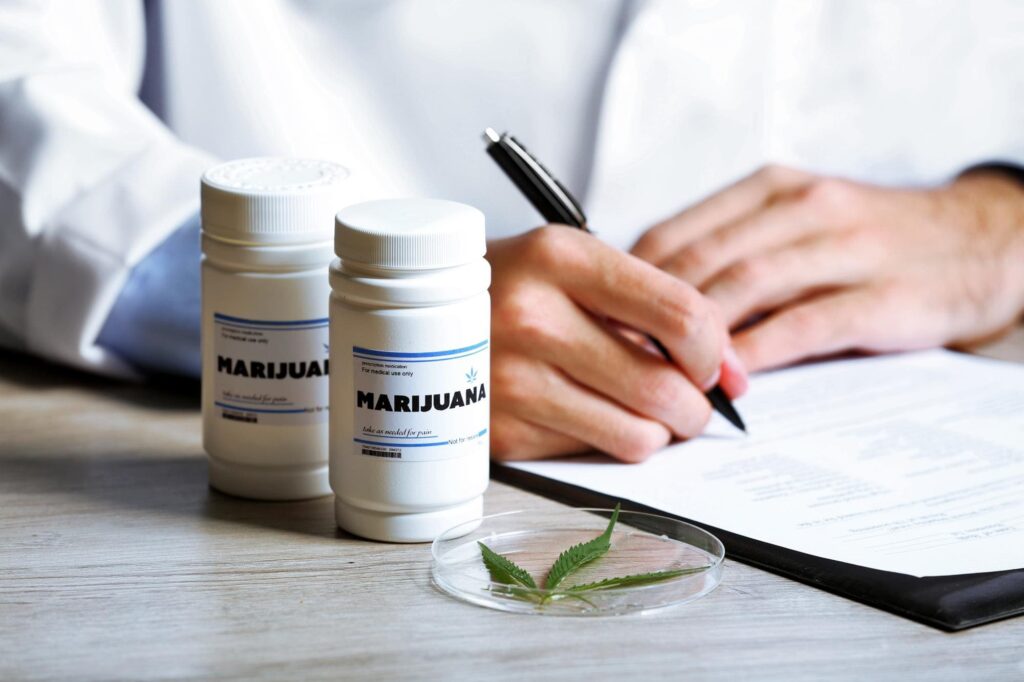
FDA PMTA application review process with marijuana product samples and documentation.
A threshold determination of whether the application contains sufficient information to permit a substantive review. FDA may refuse to file a PMTA if any of the criteria in § 1114.27(b)(1) apply.
Doctor examining blood sample and paperwork related to FDA application review.
FDA evaluation of the scientific information and data in an application, as well as recommendations from the Tobacco Product Scientific Advisory Committee (TPSAC), if the application was referred.
FDA PMTA regulatory review meeting and consultation with J&J Consulting Group experts.

Clinical study requires meticulous planning and careful execution. Failure to adhere to well-thought study protocol/regiment, may lead to a waste of resources

Cigarettes and tobacco leaves illustrating FDA PMTA requirements for tobacco products.
Requires applicants to establish and maintain records and make reports that FDA requires as necessary to determine or facilitate a determination of whether there may be grounds to withdraw or temporarily suspend a marketing granted order. Post-market reporting requirements for all products that receive a marketing granted order are set forth in § 1114.41 and FDA may require additional reporting under the terms of a marketing granted order.

Submit PMTA

How to Submit a PMTA

Follow FDA guidelines carefully. Request IAM account, prepare electronically, submit via CTP Portal, or request waiver if needed.

Request IAM Account

Apply for an IAM account if your company does not already have one, enabling secure access to FDA systems.

Prepare Electronically

Complete your PMTA application using the eSubmitter software and the CTP Transmittal Form template for accurate submission.

Submit Online

Once prepared, submit your PMTA online via the CTP Portal for FDA review and consideration.

Step-by-Step Guide to Successful PMTA Submission Process

Get Expert Help

Ready to Navigate the PMTA Process Confidently?

JJCC Group’s regulatory consultants help tobacco product manufacturers prepare, submit, review, and defend successful PMTAs efficiently and effectively.

How to Prepare

The FDA PMTA Review Process: What You Need to Know

Once submitted, your PMTA undergoes a structured, multi-phase review by the FDA’s Center for Tobacco Products (CTP). Understanding each phase helps you plan, prepare, and respond effectively.

JJCC Group: 30+ years of regulatory compliance experience and industry-leading expertise.

Phase 1: Acceptance Review

An initial administrative review confirming that the product falls under CTP jurisdiction and that the submission meets the statutory and regulatory requirements outlined in 21 CFR § 1114.27(a)(1). Outcome: Acceptance letter or Refuse to Accept (RTA) letter.

JJCC Group regulatory compliance process: step 02 illustrating streamlined solutions.
Phase 2: Filling Review

A threshold determination assessing whether the application contains sufficient information to permit a full scientific evaluation. Outcome: Filing letter or Refuse to File (RTF) letter under § 1114.27(b)(1).

Numbered step 03 illustrating quality management systems and regulatory compliance.

Phase 3: Substantive Scientific Review

The core of the PMTA evaluation. FDA scientists conduct a deep review of your toxicology, chemistry, behavioral, and manufacturing data — assessing whether your product is "appropriate for the protection of public health." The FDA may issue Deficiency Letters requesting additional information, and applications may be referred to the Tobacco Product Scientific Advisory Committee (TPSAC). Outcome: Continued review, deficiency response, or final action.

JJCC Group: Four steps to regulatory compliance and quality assurance.

Phase 4: Final Decision & Post-Market Compliance

The FDA issues either a Marketing Granted Order (MGO) authorizing market entry, or a Marketing Denial Order (MDO) prohibiting sales. Authorized products are subject to ongoing post-market reporting, adverse experience reporting, and supplemental PMTAs for any product changes.

What to Expect: Timeline & Investment

The PMTA process is a multi-year regulatory commitment. Most manufacturers should plan for:
1–2 years to gather scientific data and prepare submission documents
6–12+ months for FDA acceptance, filing, and substantive review
Ongoing post-market reporting and supplemental filings after authorization
Without proper preparation, applications frequently receive RTA, RTF, or deficiency letters — costing valuable time and resources. JJCC Group helps you avoid these pitfalls with proven submission strategies and FDA-aligned documentation.

Why Choose JJCC Group for PMTA Submission Services

Proven regulatory expertise across ENDS, nicotine pouches, cigars, and emerging tobacco categories
End-to-end submission management — from strategy to authorization
Scientific and technical depth in toxicology, chemistry, and manufacturing
FDA-aligned documentation that minimizes deficiencies and review delays
Ongoing post-market compliance support to keep your products authorized and protected

Whether you're an established tobacco manufacturer, an emerging vape brand, or an importer entering the U.S. market, JJCC Group delivers the regulatory clarity, scientific rigor, and FDA expertise needed to bring your product to market and keep it there.

Best Compliance with 5 Star

Smiling man in white coat representing JJCC Group's cosmetic regulatory expertise
Woman in lab coat presenting cGMP regulatory compliance information.
Client testimonial featuring Sarah Bennett, cosmetic brand owner, and JJCC Group expertise.
Smiling man in white coat representing JJCC Group's cosmetic regulatory expertise

99% Happy Clients

Testimonial

Trusted PMTA Regulatory Experts

Hear from tobacco manufacturers who successfully navigated the PMTA process with JJCC Group’s expert regulatory guidance.

Their PMTA expertise, documentation accuracy, and FDA communication support helped us avoid delays and regulatory setbacks.

Woman in lab coat presenting cGMP regulatory compliance information.
Sarah Bennett OWNER

JJCC simplified a complex PMTA process, delivering structured guidance, strong scientific support, and reliable regulatory strategy.

Client testimonial featuring Sarah Bennett, cosmetic brand owner, and JJCC Group expertise.
Bts Ashik OWNER

Working with JJCC Group gave us confidence, clarity, and a trusted partner throughout the entire PMTA approval journey process.

Smiling man in white coat representing JJCC Group's cosmetic regulatory expertise
Shadin De Manager

Faqs

Frequently Asked Questions

Our PMTA FAQs help manufacturers understand FDA expectations, documentation needs, scientific requirements, review timelines, and post-submission obligations, ensuring confidence throughout the PMTA process and reducing regulatory uncertainty during product approval.
What is a PMTA? and which products require one?

A Premarket Tobacco Product Application (PMTA) is the FDA pathway required for any new tobacco or nicotine product before it can be legally marketed in the United States. Under Section 910(b) of the FD&C Act and 21 CFR Part 1114, a PMTA is required for electronic nicotine delivery systems (ENDS/vapes), nicotine pouches, cigars, hookah/waterpipe tobacco, pipe tobacco, smokeless tobacco, heated tobacco products, and any new or modified tobacco product introduced after February 15, 2007.

he applicant — typically the manufacturer, brand owner, or importer — is responsible for submitting the PMTA and obtaining FDA marketing authorization. Retailers and distributors cannot legally sell tobacco products without an active Marketing Granted Order, but they are not the submitting party. JJCC Group helps each stakeholder understand their specific compliance obligations under 21 CFR Parts 1100, 1107, 1114, 1140, and 1143.

APPH is the legal standard the FDA uses to evaluate every PMTA. The agency weighs the risks and benefits of your product to both users and non-users — including potential cessation benefits for current tobacco users and the risk of initiation among non-users, especially youth. Demonstrating APPH requires robust scientific evidence across toxicology, chemistry, behavioral studies, and manufacturing controls.

The FDA conducts a structured, four-phase review:

  • Acceptance Review — confirms jurisdiction and basic regulatory requirements
  • Filing Review — verifies the application contains sufficient information for scientific review
  • Substantive Scientific Review — FDA scientists evaluate toxicology, chemistry, manufacturing, and behavioral data
  • Final Action & Post-Market Compliance — results in a Marketing Granted Order (MGO) or Marketing Denial Order (MDO), followed by ongoing reporting obligations

The PMTA process is a multi-year commitment. Most manufacturers should plan for 1–2 years to gather scientific data and prepare the submission, followed by 6–12+ months for FDA review across acceptance, filing, and substantive evaluation. JJCC Group helps streamline timelines and avoid costly delays caused by incomplete submissions or deficiency letters.

eQMS software icon illustrating document control and compliance.